After B.Tech Which Course is Best? A Complete Decision Guide (2026)
Quick Summary
- The best course after B.Tech depends on your goal: M.Tech and GATE-based PSU jobs suit students who want to stay technical, while an MBA or MCA suits those aiming for management or IT/software careers.
- GATE is the primary route into both M.Tech admissions at IITs/NITs and PSU jobs such as NTPC, ONGC, IOCL, BHEL and GAIL, with entry-level PSU packages commonly in the ₹13–18 LPA range for top-tier PSUs.
- MBA after B.Tech typically requires clearing CAT, XAT, GMAT, CMAT or SNAP; pre-MBA engineering salaries average ₹3.5–7 LPA, while graduates from strong MBA program commonly move into roles paying ₹15–30 LPA or more, according to AmbitionBox and institute placement reports (2026).
- MCA is a strong option for B.Tech graduates from non-CSE branches who want to pivot into software and IT roles.
- Direct placement remains a valid path for students confident in their core branch and keen to gain work experience immediately.
- NGFCET offers postgraduate pathways including MBA and MCA for students exploring options after their B.Tech.
What is the Best Course After B.Tech?
There is no single “best” course after B.Tech. M.Tech suits students wanting technical depth, MBA suits those aiming for management roles, MCA suits non-CSE graduates pivoting into IT, and GATE-based PSU recruitment suits those wanting stable government technical roles. The right choice depends on individual career goals.
The four most common paths are M.Tech (technical specialisation), MBA (management), MCA (advanced computer applications), and direct employment through campus placements, with government jobs via GATE-qualified PSU recruitment as a fifth route for those wanting technical roles with public-sector stability.
Popular Courses and Career Paths After B.Tech
| Path | Best Suited For | Entrance Requirement |
| M.Tech | Students who want to specialise further in their engineering branch or move into research/academia | GATE score |
| MBA | Students who want to move into management, consulting, product or leadership roles | CAT, XAT, GMAT, CMAT or SNAP |
| MCA | Non-CSE graduates who want to pivot into software development and IT roles | Institute-level or national-level computer applications entrance test |
| Government jobs via GATE/PSU | Students who want technical roles with job security and public-sector benefits | Valid GATE score |
| Direct placement | Students confident in their branch who want to start earning and gaining experience immediately | Campus placement or direct hiring |
| Short-term certifications (Data Science, Cloud, Cybersecurity) | Students who want a faster, skill-based entry into high-demand technical roles without a full postgraduate degree | Certification programme, typically 3–12 months |
| Study abroad (MS) | Students aiming for international technical or research careers | GRE/IELTS/TOEFL, depending on the country |
M.Tech and Government Jobs via GATE
The Graduate Aptitude Test in Engineering (GATE) is the common gateway to both M.Tech admissions and PSU recruitment.
- Entrance exam: GATE score, valid for M.Tech admissions at IITs, IISc and NITs
- PSU route: More than 70 Public Sector Undertakings including NTPC, ONGC, IOCL, BHEL, GAIL, SAIL and POWERGRID use GATE scores directly to shortlist candidates, without a separate written exam
- Entry-level salary: For CSE candidates, top-tier PSUs such as IOCL, ONGC and GAIL commonly offer ₹13 LPA – ₹18 LPA
- Why it’s attractive: Structured pay scales, HRA and DA allowances, medical benefits and long-term job security
- Eligibility: Final-year B.Tech students can generally appear for GATE and apply for PSU recruitment, provided they complete their degree before the PSU’s joining date
- Best for: Students who want to deepen technical expertise or move toward research, academia, or stable public-sector technical roles
MBA After B.Tech
An MBA is one of the most common paths for engineering graduates who want to move beyond purely technical roles into management, consulting, product management, finance or strategy.
- Entrance exams: CAT, XAT, GMAT, CMAT or SNAP, followed by group discussion and personal interview rounds at most institutes
- Pre-MBA salary: A pre-MBA engineer in India typically earns ₹3.5 LPA – ₹7 LPA, according to AmbitionBox (2026)
- Post-MBA salary: Graduates of strong MBA programmes commonly move into roles paying ₹15 LPA – ₹30 LPA or more, based on institute placement reports for 2025-26
- Top specialisations for engineers: Business Analytics, Product Management, Operations, Finance, Marketing
- Best for: Students aiming for leadership, business strategy or cross-functional roles rather than staying purely technical
Students interested in this route can explore NGFCET’s postgraduate management programme for structured MBA options after B.Tech.
MCA After B.Tech
An MCA offers a structured route into software and IT roles for B.Tech graduates who want to build a technical career without pursuing an MBA.
- Best suited for: Non-CSE graduates who want to pivot into software development and IT
- Core focus: Programming, database management and software engineering fundamentals
- Entrance route: Institute-level or national-level computer applications entrance test
- Why it works: Acts as a practical bridge for students whose undergraduate branch did not include a strong computer science curriculum
NGFCET’s master’s in computer applications programme is one such option available for students choosing this path.
Short-Term Certification Courses After B.Tech
Beyond formal postgraduate degrees, many B.Tech graduates choose short-term, skill-based certification courses that lead directly into high-demand technical roles without a multi-year commitment.
| Course | Typical Duration | Core Skills | Entry-Level Salary Range | Source |
| Data Science & AI | 6–12 months | Python, Machine Learning, SQL, Data Visualisation | ₹5 LPA – ₹11 LPA, rising to ₹15–40 LPA with AI/GenAI specialisation | AmbitionBox, Glassdoor (2026) |
| Cloud Computing (AWS/Azure/GCP) | 3–6 months | Cloud architecture, DevOps, infrastructure management | ₹5 LPA – ₹9 LPA at entry level, up to ₹22–30 LPA at senior levels | Industry salary aggregates (2026) |
| Cybersecurity & Ethical Hacking | 3–9 months | SOC monitoring, threat analysis, CEH/Security+ certifications | ₹4 LPA – ₹9 LPA at entry level (SOC Analyst/L1), rising sharply with certifications like CISSP or cloud security specialisations | AmbitionBox, industry salary aggregates (2026) |
These certification-led paths suit graduates who want to stay technical and enter the workforce faster than a two-year postgraduate degree allows.
- Best for: Students who want a faster, skill-based entry into technical roles without a full postgraduate degree
- Company type matters: Product companies and GCCs generally pay more than IT services firms for the same certification
- Certifications compound with experience: Adding a recognised certification (such as AWS Security Specialty or CISSP) on top of relevant experience commonly brings a noticeable salary premium over non-certified peers
The right course can also vary depending on which B.Tech branch a student comes from:
| B.Tech Branch | Common Next Steps |
| Mechanical Engineering | M.Tech (Design/Thermal/Manufacturing), GATE-based PSU jobs, MBA in Operations |
| Computer Science Engineering (CSE) | MCA, M.Tech in CS/AI, direct software roles, MBA in Product Management |
| Electronics & Communication (ECE) | M.Tech in VLSI/Communication, GATE-based PSU jobs (BHEL, ISRO-linked centres), MBA |
| Electrical & Electronics (EEE) | M.Tech in Power Systems, GATE-based PSU jobs (NTPC, POWERGRID), MBA |
These are general patterns rather than fixed rules — the right decision still depends on individual interest, target companies, and long-term career goals.
How to Decide: A Simple Framework
Students can narrow down the right path by matching their goal to the route below:
- Want technical depth or a research path? Choose M.Tech, supported by a strong GATE score.
- Want leadership, strategy or cross-functional roles? Choose MBA — but be prepared for CAT-level competitive exams and the associated tuition investment.
- Want a stable, well-paying public-sector technical role? Prepare for GATE with a PSU-recruitment focus — a direct, merit-based route.
- Branch didn’t offer strong CS exposure but want software roles? MCA offers a practical bridge.
- Confident in your branch and want to start earning now? Direct placement is reasonable, with further studies possible part-time or later.
- Want to stay technical but enter the workforce faster? A short-term certification in Data Science, Cloud or Cybersecurity (3–12 months) is the quickest route.
For students who are still exploring their overall B.Tech journey before deciding on the next step, the complete guide to B.Tech covers programme structure, specialisations and eligibility in detail, and reviewing career options after B.Tech and average salary after B.Tech figures can help set realistic expectations before choosing a postgraduate path. Students undecided between branches at the outset can also refer to a breakdown of B.Tech branches to understand how specialisation choice early on shapes these later options.
Salary Comparison: Direct Job vs Further Studies
| Path | Typical Entry-Level Salary Range |
| Direct B.Tech placement | ₹3.5 LPA – ₹8 LPA (varies by branch, college and company) |
| M.Tech + PSU (via GATE) | ₹13 LPA – ₹18 LPA (top-tier PSUs, CSE roles) |
| MBA (strong institute) | ₹15 LPA – ₹30 LPA or more (institute-dependent) |
| MCA + software role | Comparable to direct CSE placement, varies by company and skill set |
These figures are indicative industry averages compiled from AmbitionBox and institute placement reports (2025-26) and are not specific to any single institute’s outcomes. Actual salaries depend heavily on the specific institute, specialisation, company and individual performance.
Frequently Asked Questions
There is no single best course M.Tech suits students who want technical depth, MBA suits those aiming for management roles, MCA suits non-CSE graduates pivoting into IT, and GATE-based PSU recruitment suits those wanting stable technical government roles. The right choice depends on individual career goals.
Common options include M.Tech in Design, Thermal or Manufacturing Engineering, GATE-based PSU roles in core manufacturing and energy companies, or an MBA in Operations for students interested in management.
CSE graduates often choose between an MCA, M.Tech in Computer Science or AI, direct software roles, or an MBA in Product Management, depending on whether they want to stay technical or move into business roles.
GATE is not mandatory, but it is the primary route for students who want to pursue M.Tech at top institutes or apply for PSU jobs through GATE-based recruitment. Students planning an MBA or MCA route do not need a GATE score.
Neither is universally better M.Tech is suited to students who want to deepen technical expertise or move toward research, while an MBA suits those aiming for management, consulting or leadership roles. The right choice depends on career goals rather than one option being superior.
Yes. A B.Tech degree meets the basic eligibility for MBA entrance exams such as CAT, XAT, GMAT, CMAT and SNAP, and many B-schools admit engineering graduates directly without requiring prior work experience.
Neither is universally better short-term certifications in Data Science, Cloud Computing or Cybersecurity offer a faster route into technical roles, typically within 3–12 months, while postgraduate degrees like M.Tech or MBA offer deeper specialisation and, in many cases, stronger long-term salary growth. The right choice depends on how quickly a student wants to enter the workforce versus how much they want to specialise.
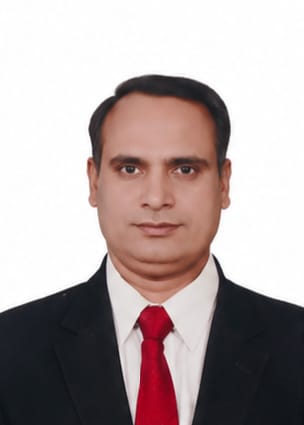
Dr. Vinod Kumar is a distinguished academic leader serving as the Dean, NGFDC, Dean (University Affairs), and Head of the Department of Electrical Engineering & Electronics and Communication Engineering (EE & ECE). He is committed to advancing academic excellence through quality teaching, research, curriculum innovation, and institutional leadership. His expertise spans electrical and electronics engineering, academic administration, and industry-oriented education. Through his leadership, he actively promotes innovation, interdisciplinary learning, faculty development, and student success, preparing graduates to excel in a rapidly evolving technological landscape.