B.Tech Computer Science Engineering: Full Guide

Summary
- B.Tech CSE is a four-year AICTE-approved undergraduate engineering degree focused on programming, data structures, algorithms, and software systems.
- Eligibility requires Class 12 with Physics and Mathematics compulsory, plus Chemistry, Biology, or a Technical Vocational subject.
- Admission is generally through JEE Main, though many private institutes, including NGFCET, also admit through direct merit and scholarship-linked entrance tests.
- Average starting salary for B.Tech CSE graduates in India ranges from ₹3.5 LPA to ₹8 LPA, rising to ₹18 LPA or more with 4-6 years of experience.
- Career paths include Software Developer, Data Analyst, System Analyst, QA Engineer, and roles in AI, cloud computing, and cyber security.
- Graduates can also pursue higher studies through GATE, or government roles through PSU recruitment, ISRO, and DRDO technical exams.
- At NGFCET, the CSE program is delivered with Sunstone and includes 550+ hours of DSA training, industry internships, and AI tool exposure integrated into the curriculum.
What is B.Tech CSE?
B.Tech in Computer Science Engineering (CSE) is a four-year undergraduate engineering programme that trains students in programming, data structures, algorithms, computer networks, database management, and software development. The programme is approved by AICTE and typically requires passing Class 12 with Physics and Mathematics as compulsory subjects. It prepares graduates for careers in software development, IT services, data analytics, and emerging technology fields such as artificial intelligence and cyber security.
CSE is one of several B.Tech specializations offered under the broader engineering umbrella; you can explore all B.Tech specializations to see how it compares with AI & ML, Data Science, and Cyber Security before deciding.
Why Should Choose B.Tech CSE?
B.Tech CSE remains one of the most in-demand engineering specialisations because the skills it teaches, programming, problem-solving, and system design, apply across nearly every industry, not just IT. According to NASSCOM’s 2025 Annual Strategic Review, India’s IT industry is on track to generate $300 billion in revenue by FY2026, sustaining strong demand for CSE-trained talent.
Students considering CSE should weigh a few factors before choosing it:
- Genuine interest in logical problem-solving, not just placement statistics, since the coursework is heavily project- and code-based.
- Comfort with continuous learning, as tools, frameworks, and industry expectations change rapidly.
- Career flexibility, since CSE graduates can move into software development, data science, product management, cyber security, or research.
Expert Insight
Industry Perspective: Recruiters increasingly prioritize hands-on coding ability and project experience over theoretical scores alone. Familiarity with real-world tools, cloud platforms, version control, and applied AI, is becoming as important as core DSA knowledge during technical interviews.
Career Perspective: CSE graduates who build a portfolio of projects, internships, and coding practice during their degree tend to have significantly stronger placement outcomes than those who rely on coursework alone. Internship exposure in the 3rd or 4th year is a strong predictor of placement readiness.
Academic Perspective: A CSE curriculum that balances core computer science fundamentals (DSA, OS, DBMS, Networks) with emerging areas (AI, cloud, data engineering) better prepares students for a job market where technology stacks change every few years.
Eligibility Criteria
| Requirement | Details |
| Qualifying exam | Class 12 (or equivalent) from a recognised board |
| Compulsory subjects | Physics and Mathematics |
| Additional subject | One of Chemistry, Biology, Biotechnology, or a Technical Vocational subject |
| Minimum marks (NIT/IIIT/CFTI admission via JEE Main) | 75% aggregate (General/OBC/EWS) or 65% (SC/ST), or top 20 percentile of the board |
| Minimum marks to appear for JEE Main | None; the percentage rule applies only at the admission stage |
| Entrance exam | JEE Main (national); many private institutes, including NGFCET, also accept direct admission and merit-based scholarship tests |
| Lateral entry | Diploma holders in a relevant engineering field can apply for direct admission to the second year |
| Reservation norms | Relaxation applies for SC/ST/OBC/EWS/PwD candidates as per government norms; NGFCET applies a 45% qualifying-marks relaxation for SC/ST candidates |
According to the National Testing Agency’s JEE Main 2026 guidelines, there is no minimum Class 12 percentage required simply to appear for the exam. The 75% (or 65% for SC/ST) rule applies only when seeking admission to NITs, IIITs, and other centrally funded technical institutions.
Admission Process
- Appear for JEE Main (or check if your target institute accepts direct/merit-based admission).
- Shortlist colleges based on cutoff, affiliation, fee structure, and placement record.
- Apply directly or through counselling (JoSAA for NITs/IIITs; direct application for most private institutes).
- Submit required documents: Class 10 and 12 marksheets, category certificate (if applicable), passport-size photograph, and ID proof.
- Complete fee payment and seat confirmation to lock in admission.
At NGFCET, students can also apply for scholarships of up to 100% through the N-SAT (New-Age Scholarship & Admission Test) alongside the regular application process.
Syllabus & Core Subjects
| Semester Focus Area | Core Topics Covered |
| Programming Fundamentals | C, C++, Python, problem-solving logic |
| Data Structures & Algorithms (DSA) | Arrays, trees, graphs, sorting, searching, complexity analysis |
| Computer Science Fundamentals | Operating Systems, Computer Networks, DBMS, Computer Architecture |
| Data Science & Engineering | Data handling, visualization, applied statistics |
| Artificial Intelligence & Machine Learning | ML fundamentals, applied AI tools and frameworks |
NGFCET’s CSE curriculum includes over 550 hours of dedicated DSA(Data Structures and Algorithms) training and is refreshed every six months to stay aligned with current industry requirements, including guided exposure to at least two AI tools per academic year.
CSE Specializations at a Glance
B.Tech CSE increasingly branches into focused specializations. Each has distinct career outcomes:
| Specialization | Primary Focus | Typical Roles |
| CSE (Core) | Software, DSA, systems | Software Developer, SDE |
| AI & ML | Machine learning, applied AI | ML Engineer, AI Developer |
| Data Science | Data analysis, statistics | Data Analyst, Data Scientist |
| Cyber Security | Network and information security | Security Analyst, Ethical Hacker |
| Cloud Computing | Distributed systems, cloud platforms | Cloud Engineer, DevOps Engineer |
For a detailed, side-by-side breakdown of the two, see our B.Tech AI vs CSE comparison.
Fees & Scholarships
| Item | Amount |
| Tuition Fee (4 years) | ₹4,05,000 |
| Registration Fee | ₹10,000 |
| Total Programme Fee | ₹4,15,000 |
| Scholarship (via N-SAT) | Up to 100% for eligible candidates |
Fee figures reflect NGFCET’s published B.Tech CSE program cost; candidates should verify current figures directly with the college, as fee structures are revised periodically. Full program details, including internship and industry-partner structure, are available on the NGFCET B.Tech CSE programme page.
Skills You’ll Gain
- Programming and software development (C, C++, Python, Java)
- Data structures and algorithmic problem-solving
- Database design and management
- Analytical and logical reasoning
- Applied exposure to AI tools and machine learning workflows
- Communication, teamwork, and interview readiness through structured training
Placements: Top Recruiters
B.Tech CSE graduates are recruited across IT services, product companies, and start-ups. Common recruiter categories include:
- IT Services: TCS, Infosys, Capgemini, Cognizant, Wipro
- Product & Technology Companies: Amazon, Microsoft India, Accenture
- Emerging Sectors: AI-focused start-ups, fintech, and cloud-services companies
NGFCET’s Training and Placement Cell coordinates on-campus and off-campus recruitment drives, along with structured interview preparation exceeding 100 hours as part of the CSE program.
Jobs After B.Tech CSE
Common job roles for B.Tech CSE graduates include Software Developer, Software Development Engineer (SDE), Data Analyst, QA/Test Engineer, System Analyst, and IT Consultant. Graduates also enter emerging roles in AI, cloud computing, and cyber security as these fields expand within Indian IT and product companies.
Entry-level roles typically involve coding, testing, and maintaining software applications, with career progression toward senior developer, technical lead, or specialist roles (AI, data, security) within 3-5 years.
Salary After B.Tech CSE
Starting salaries for B.Tech CSE graduates in India typically range from ₹3.5 LPA to ₹8 LPA, depending on the recruiting company, city, and skill set. With 4-6 years of experience, salaries commonly rise to ₹18-25 LPA, and senior roles in product-based companies can exceed ₹30 LPA.
| Experience Level | Typical Salary Range (Annual) |
| Fresher (0-1 year) | ₹3.5 LPA – ₹8 LPA |
| Early Career (1-4 years) | ₹8 LPA – ₹18 LPA |
| Senior (5+ years) | ₹25 LPA – ₹50 LPA+ |
Figures are compiled from Payscale, Glassdoor, and Indeed 2026 salary data and vary by city, company type, and specialization; product-based companies generally pay above service-sector averages.
Higher Studies & Government Job Pathways
B.Tech CSE graduates who want to pursue higher studies or government roles have several established routes:
- GATE (Graduate Aptitude Test in Engineering): Opens admission to M.Tech/MS programmes at IITs and NITs, and is also used for PSU recruitment.
- PSU Recruitment: Public Sector Undertakings recruit engineering graduates directly through GATE scores for technical roles.
- ISRO and DRDO: Conduct dedicated recruitment exams for engineering graduates seeking research and technical government careers.
- Higher Education Abroad: CSE degrees are widely recognised for MS programmes in the US, Europe, and other countries.
B.Tech CSE vs Other Specializations
| Parameter | CSE (Core) | AI & ML | Cyber Security |
| Primary Focus | Programming & systems | Machine learning & AI | Network & data security |
| Best Suited For | Broad software career interest | Analytical, math-driven interest | Security-focused interest |
| Typical Starting Salary | ₹3.5-8 LPA | ₹4-9 LPA | ₹4-8 LPA |
Explore our full range of to compare specializations in detail before choosing your path.
Frequently Asked Questions
B.Tech CSE is a four-year AICTE-approved undergraduate engineering degree covering programming, data structures, algorithms, and software systems, preparing students for careers in software development and IT.
Candidates need Class 12 with Physics and Mathematics as compulsory subjects, along with Chemistry, Biology, or a Technical Vocational subject, and generally must qualify JEE Main or an equivalent entrance test.
Common roles include Software Developer, SDE, Data Analyst, QA Engineer, and System Analyst, with further options in AI, cloud computing, and cyber security.
Starting salaries typically range from ₹3.5 LPA to ₹8 LPA, depending on the recruiting company, location, and specialization, rising significantly with experience.
Yes. Graduates can pursue M.Tech/MS through GATE, apply for PSU technical roles, or appear for ISRO and DRDO recruitment exams.
Neither is universally “better.” CSE offers broader software career flexibility, while AI & ML suits students with a strong interest in machine learning and data-driven problem-solving. See the comparison guide linked above for a full breakdown.
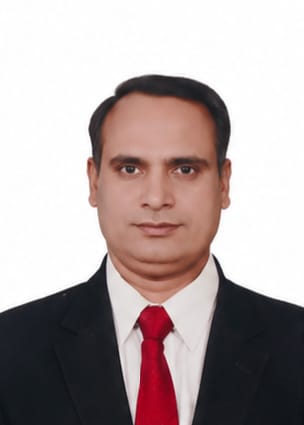
Dr. Vinod Kumar is a distinguished academic leader serving as the Dean, NGFDC, Dean (University Affairs), and Head of the Department of Electrical Engineering & Electronics and Communication Engineering (EE & ECE). He is committed to advancing academic excellence through quality teaching, research, curriculum innovation, and institutional leadership. His expertise spans electrical and electronics engineering, academic administration, and industry-oriented education. Through his leadership, he actively promotes innovation, interdisciplinary learning, faculty development, and student success, preparing graduates to excel in a rapidly evolving technological landscape.